
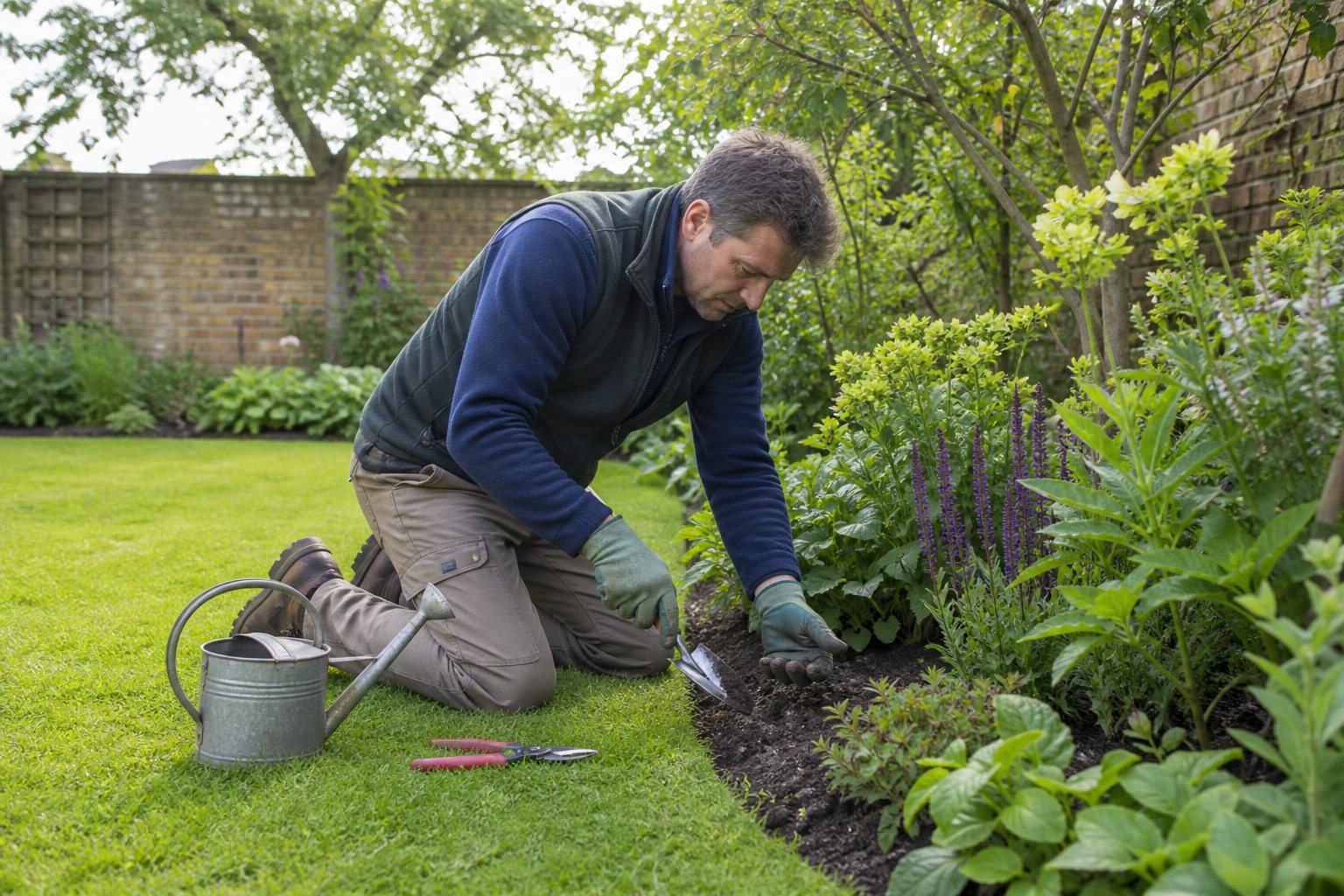
Healthy gardens are built through observation: water reaches the roots, soil stays protected, plants are pruned for a reason and small problems are corrected before they become expensive ones.
Garden care is easier when tasks are connected. Mulch affects moisture and weeds; pruning affects flowering and plant health; mowing height affects drought tolerance. This guide brings the essentials into one practical system for London gardens, from soil and watering to lawns, shrubs and seasonal review.
Begin with soil condition
Check texture, drainage and compaction in more than one place. Soil near recent building work may differ from an older bed. Add organic matter where it will improve structure, but avoid digging saturated clay or assuming compost can solve a serious drainage defect.
Protect soil with planting or suitable mulch. Keep heavy foot traffic to paths and stepping areas, especially during wet weather.
Water according to roots and weather
New plants need consistent attention while roots establish. Water thoroughly at the base, then check how deeply moisture has travelled. A brief surface sprinkle encourages shallow rooting and may not reach the root ball.
Established planting often needs less frequent but deeper watering during dry spells. Containers are different: limited compost and warm walls can make daily checks necessary.
Practical tip: Push a finger or small trowel below the surface before watering. The appearance of the top centimetre alone can be misleading.
Feed only when growth needs support
Fertiliser is not a cure for waterlogging, poor light or damaged roots. Identify the plant and follow an appropriate rate and season. Excess nitrogen produces soft growth that can be more vulnerable to pests and frost.
Organic mulches contribute gradually to soil condition but vary in nutrient content. Keep them clear of stems and do not pile material deeply against trees.
Prune with a clear objective
Decide whether the aim is removing damage, controlling size, encouraging flowers or improving structure. Use clean, sharp tools and place cuts appropriately. Random clipping often creates dense outer growth and leaves the underlying issue unresolved.
Timing depends on species. Spring-flowering shrubs, summer-flowering shrubs, fruit trees and evergreens do not share one universal pruning month. When identification is uncertain, limit work to clear hazards and research first.
Care for lawns by condition
Mow when grass is actively growing and remove only a sensible proportion of leaf length. Raise the cut during dry weather and avoid mowing saturated or frosted turf. Vary the route to reduce repeated compaction.
Treat bare areas according to cause. Shade, wear, pet damage and waterlogging require different remedies. Aeration and overseeding help some lawns, but neither can compensate for unsuitable light indefinitely.
Control weeds before they reproduce
Remove annual weeds while small and before seed is set. Perennial weeds may require repeated removal of roots or persistent top growth. Learn how the species spreads before cultivating the area, because chopping some roots creates more plants.
Dense, suitable planting and mulch reduce open soil where weeds establish. Avoid letting membrane and decorative gravel become a substitute for ongoing observation.
Monitor pests and disease proportionately
Inspect growing tips, leaf undersides and the base of stressed plants. Identify damage before treating it and tolerate minor cosmetic feeding on established plants. Encourage predators and correct poor growing conditions.
Remove diseased material carefully, clean tools when needed and avoid moving questionable soil around the garden. Persistent or serious tree problems merit qualified advice.
Review the garden each season
In spring, prepare supports, mulch and control early weeds. Summer priorities are water, growth and access. Autumn brings leaf management and planting opportunities, while winter reveals structure and repair needs.
Keep a brief record of pruning, planting and recurring problems. The notes turn maintenance from guesswork into a plan tailored to the property.
- Observe before acting.
- Match plants to conditions.
- Protect soil structure.
- Work at the correct season.
- Review results before repeating a treatment.
Establish new plants correctly
Water the plant before removing its pot and check whether roots circle tightly. Prepare a planting hole suited to the root ball and surrounding soil rather than creating a small pocket of rich compost that roots are reluctant to leave. Plant at the correct depth, firm gently and water thoroughly.
Mulch the wider root area while keeping the stem clear. New plants need checking through their first growing seasons, including during cool dry weather. Support trees only where necessary and remove or adjust ties before they constrict growth.
- Confirm mature size and site conditions.
- Water the root ball and surrounding soil.
- Keep the original soil level visible.
- Label or record the plant for future care.
Maintain hedges without weakening them
Identify the hedge species and its flowering or growth pattern. Formal evergreen hedges may need regular light cuts, while flowering or mixed hedges benefit from more selective timing. Always check for active nests before work.
Keep the base sufficiently broad for light to reach lower growth where the species and style allow. Avoid repeated cutting into old bare wood on plants that do not regenerate reliably. Remove cuttings from the top and base so they do not smother foliage or block drains.
Look after patios and garden structures
Sweep surfaces regularly and remove leaves before they decay into joints. Treat algae according to the paving material and underlying drainage; aggressive pressure washing can open joints and damage softer stone. Test any cleaner in an inconspicuous area and protect adjacent plants.
Inspect timber for loose fixings, trapped moisture and failing finishes. Keep soil and dense vegetation away from vulnerable bases. Climbers need ties and supports that can carry mature weight without damaging walls or fences.
Practical tip: Maintenance that preserves a sound surface is cheaper and less disruptive than repeated cosmetic cleaning followed by premature replacement.
Create a first-year care record
Write down planting dates, pruning, lawn treatments and recurring symptoms. Add photographs from fixed viewpoints each season. The record shows whether a plant is genuinely declining or simply following its normal cycle.
Include product names and rates where treatments are used, plus weather conditions and results. A clear history prevents duplication when another family member or gardener takes over and helps professional diagnosis if a problem persists.
Related gardening guides
- Natural approaches to common garden pests
- Seasonal garden maintenance guide
- A practical tidy-garden routine
Need a hand with the practical work?
Freddie’s Gardening can help with regular or one-off maintenance covering lawns, beds, pruning and seasonal garden care, planned around the actual condition of your property.