
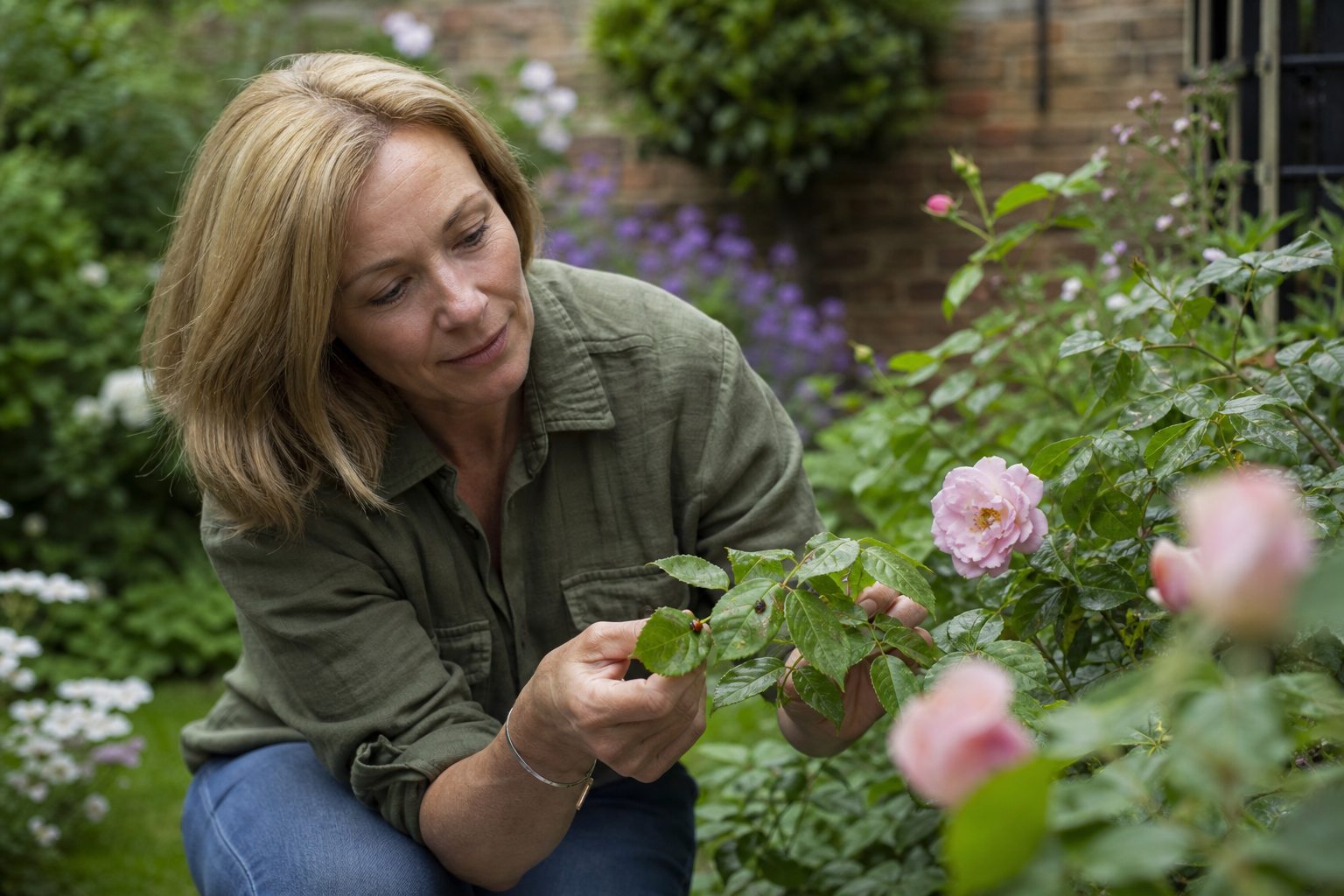
A healthy garden is not a sterile garden. The aim is to keep damaging outbreaks below the point where plants suffer, while leaving room for pollinators, birds and the insects that help control pests naturally.
London gardens often concentrate many plants into a small space. Warm walls, sheltered corners and repeated container planting can make ideal conditions for aphids, vine weevil, slugs and snails. Reaching first for a broad-spectrum spray may remove the visible problem, but it can also kill predators and leave the garden more vulnerable a few weeks later. A better approach starts with identification, plant health and targeted action.
Identify the damage before treating it
Holes in leaves do not automatically mean slugs. Rounded notches around the edge of evergreen leaves often point to adult vine weevils, while irregular holes and silvery trails are more typical of slugs and snails. Distorted young growth may hide aphids; pale stippling on leaves in a hot, dry conservatory or sheltered patio can indicate spider mites.
Inspect both sides of affected leaves, the growing tips and the compost surface. Look at several plants rather than the worst leaf. Old damage will not disappear after treatment, so mark or photograph it and judge success by the condition of new growth. Correct identification prevents unnecessary intervention and helps you choose the least disruptive remedy.
Practical tip: Check plants in the evening with a torch. Slugs, snails and several leaf-feeding insects are easier to find after dusk or following rain.
Start with stronger plants and better growing conditions
Stressed plants are easier targets. A container that repeatedly dries out, a shade-loving plant exposed to afternoon sun or a shrub fed with too much nitrogen will often produce soft, vulnerable growth. Before treating insects, correct the cause: water deeply but not constantly, improve drainage where roots remain wet, and feed according to the plant rather than by habit.
Crowded growth also matters. Dense stems restrict air movement and make inspection difficult. Selective thinning can reduce hiding places without stripping the plant. Remove dead leaves from pots and lift accumulated debris beneath hedges, but do not make every corner bare; some undisturbed habitat supports ground beetles and other useful predators.
Use physical controls first
Many early infestations can be stopped by hand. Aphids can be rubbed from sturdy shoots or displaced with a controlled jet of water. Caterpillars on a small brassica bed can be picked off, provided they are correctly identified. Badly affected shoot tips may be pruned into a bag rather than dropped on the compost heap.
Fine insect mesh is useful over vulnerable vegetables, but it must be secured at the edges and kept clear of foliage. Copper barriers and abrasive materials around pots give mixed results in wet weather, so combine them with evening checks and fewer damp hiding places. Sticky traps are mainly a monitoring tool; outdoors they can catch beneficial insects and should be used cautiously.
- Quarantine new container plants for a few days and inspect the compost.
- Clean pots and supports before reusing them.
- Remove only genuinely infested material, not every marked leaf.
- Use netting with a mesh size suited to the pest you need to exclude.
Encourage natural predators
Ladybirds, lacewing larvae, hoverfly larvae and many small birds consume large numbers of soft-bodied pests. They need more than a single insect hotel. A succession of simple flowers, access to shallow water and some shelter creates a more reliable garden ecosystem.
Choose open flowers that insects can reach easily, including herbs allowed to flower, single-form calendula, alyssum and hardy geraniums. Avoid spraying flowers in bloom. A mixed hedge or climber can provide cover for birds, while a small log pile in a quiet corner supports beetles and decomposers. In a compact London garden, even two or three well-chosen habitat features can make a measurable difference.
Deal with slugs and snails without blanket treatments
Seedlings and fresh hosta growth are most vulnerable. Water in the morning so the surface is less damp overnight, raise pots away from walls, and remove boards or empty containers that create daytime shelters. Check beneath rims and around drainage holes.
Where losses continue, use targeted controls approved for UK gardens and follow the label exactly. Ferric phosphate products are generally preferred to older metaldehyde pellets, but no product replaces good placement and monitoring. Protect only the plants at genuine risk rather than scattering bait across the whole garden.
Know when disease is the real problem
Brown patches, leaf spots and collapse may be caused by fungi, waterlogging, frost or root damage rather than insects. Box blight, honey fungus and bacterial problems require different decisions from aphids or caterpillars. If symptoms spread despite improved care, photograph the whole plant and close details, note when the problem began and check recent weather and watering.
Do not move questionable soil or infected clippings around the garden. Clean tools between plants when disease is suspected. For large trees, extensive dieback or a recurring problem affecting several species, obtain qualified advice before removing valuable planting.
Build a simple inspection routine
A ten-minute weekly check during spring and early summer is more effective than a major response after damage becomes obvious. Look at roses, tender shoots, vegetable seedlings and container plants first. Check soil moisture, remove diseased fallen material and record anything unusual.
The threshold for action depends on the plant. A few nibbled leaves on an established shrub are cosmetic; the same number of pests on six new seedlings may destroy the crop. Treat the garden as a living system, intervene precisely, and review the result before taking another step.
Manage aphids on roses and new growth
A small number of aphids on established roses rarely justifies spraying the whole plant. Inspect the youngest shoots and buds, look for ladybird larvae and hoverfly larvae, and remove only heavily congested tips if necessary. A controlled stream of water can dislodge aphids, but support delicate stems and avoid leaving foliage wet late in the day.
Ant activity can reveal aphid colonies because ants collect honeydew and may deter predators. The aim is not to eliminate every ant but to monitor the plant and reduce the aphid concentration. Excess high-nitrogen feed encourages soft growth, so correct feeding as well as the visible insects.
Practical tip: Ladybird larvae do not resemble adult ladybirds. Identify unfamiliar predators before removing them from an infested plant.
Control vine weevil in containers
Adult vine weevils leave characteristic notches around leaf edges, but the larvae cause the serious damage by feeding on roots. A plant that wilts despite moist compost or lifts away with few roots needs immediate inspection. Check new plants and reused pots before adding them to a collection.
Biological nematode treatments can be effective when the product, soil temperature and moisture conditions are suitable. Follow current label instructions precisely. Repot badly affected plants into clean containers with fresh growing medium, remove larvae and dispose of contaminated compost responsibly.
Respond to caterpillars without harming butterflies
Not every caterpillar is a pest, and many cause only limited seasonal feeding. Identify the host plant and species where possible. On small vegetable crops, fine mesh installed before egg laying is more reliable than reacting after extensive damage.
Hand removal may be appropriate on a small crop, but wear gloves and avoid species that can irritate skin. Leave caterpillars on ornamental or wild plants when the damage is tolerable. The decision should balance plant survival, food production and the garden’s wildlife role.
Keep a pest record across the season
Record the plant, symptoms, date, weather and action taken. A recurring infestation on the same plant may indicate poor siting or stress rather than a garden-wide pest problem. Notes also prevent repeated treatments when old damage remains visible.
Review results after new growth develops. If physical control and improved care work, stop there. If a valuable plant continues to decline, obtain a confident diagnosis before escalating treatment.
- Photograph both sides of affected leaves.
- Check nearby plants of the same species.
- Record products and application dates.
- Note useful predators present.
- Judge recovery from new growth, not damaged old leaves.
Related gardening guides
- Essential garden care tips for healthier plants
- Keeping a garden neat without constant work
- Seasonal garden maintenance through the year
Need a hand with the practical work?
If pest damage is part of a wider maintenance problem, Freddie’s Gardening can help with careful pruning, bed care and seasonal garden maintenance while keeping the work proportionate to the condition of the garden.