
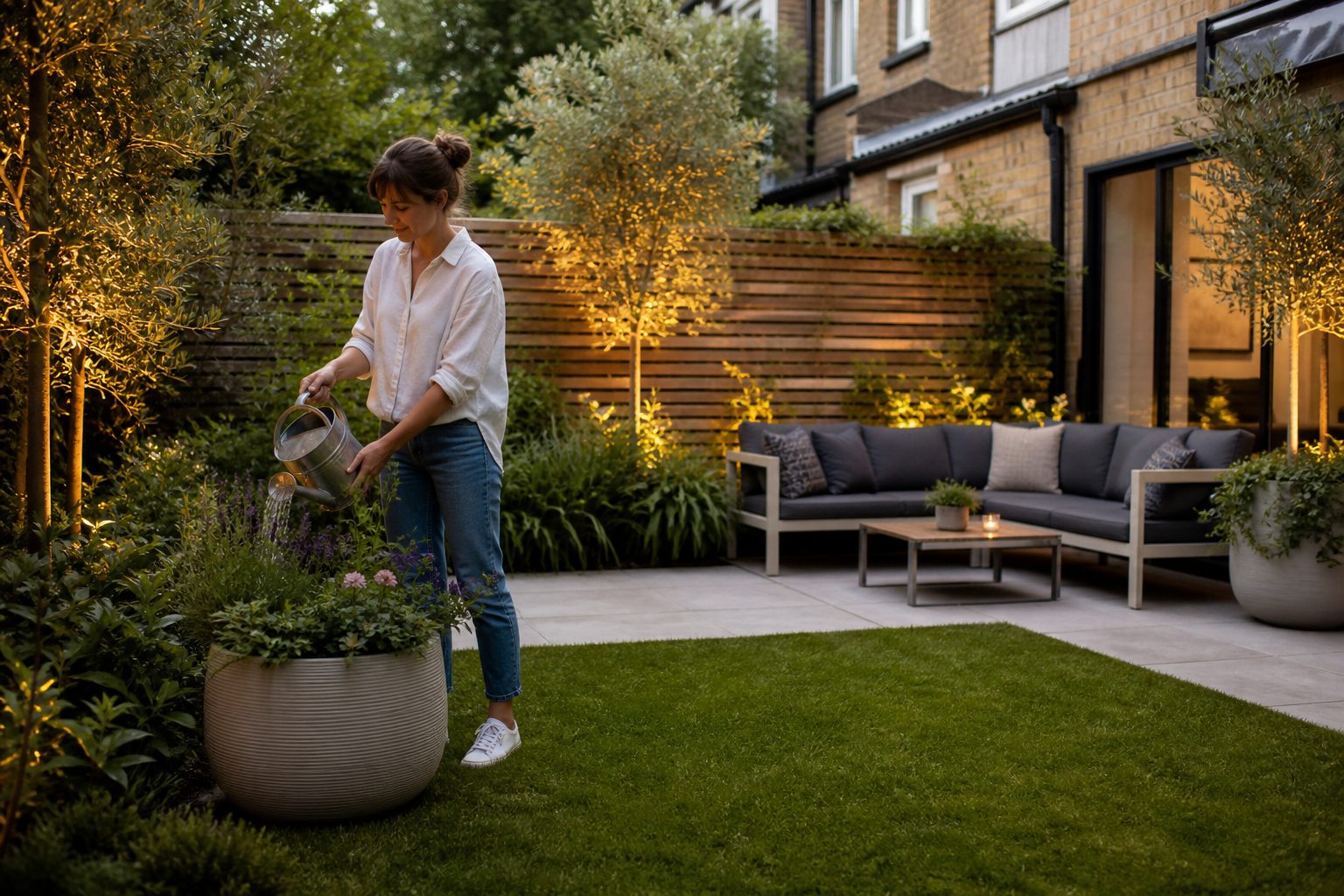
An easy-care garden should continue to look composed during a busy week, a holiday and a spell of difficult weather. That comes from resilient choices, not from replacing living plants with hard surfaces.
Busy homeowners often need a garden that can recover when a maintenance session is missed. The priorities are straightforward access, plants matched to the site, fewer high-frequency jobs and a short routine that catches problems early. The result can still be green, seasonal and personal.
Audit the jobs that consume the most time
List what you actually did in the garden over the last month. Frequent watering, clipping an unsuitable hedge and struggling with a shaded lawn are often larger burdens than general weeding. Solve the repeated task before redesigning areas that already work.
Separate jobs that are necessary for plant health from those created by the layout. A narrow lawn strip, inaccessible corner or collection of tiny pots may be redesigned; watering new plants during establishment cannot simply be skipped.
Practical tip: Remove one recurring frustration at a time and observe the result for a season before undertaking a complete makeover.
Choose dependable structure
Use a small number of shrubs with a mature size appropriate to the bed. Plants that naturally fit their space need less corrective pruning and retain a better shape. Combine evergreen structure with deciduous plants or grasses so the garden changes through the year.
Avoid relying on one species for every boundary. A pest or disease can then affect the whole framework at once. A restrained mixture is more resilient while still looking coherent.
Replace fragile planting with site-suitable groups
Group plants that share light, soil and watering needs. In dry sun, select plants that tolerate heat once established; in shade, use foliage plants adapted to lower light rather than repeatedly replacing sun lovers.
Repeat a limited palette in drifts. This simplifies deadheading, dividing and seasonal cutting because similar plants can be handled together.
- Allow for mature height and spread.
- Prefer disease-resistant varieties where available.
- Limit plants that require staking.
- Use bulbs to add seasonal colour without occupying permanent surface space.
Make watering more efficient
Water deeply at the root zone and check the soil rather than following a timer blindly. New planting needs close attention during establishment, but established plants should be encouraged to root deeply where conditions allow.
Larger containers retain moisture longer than small pots. Group them near a practical water source and use an irrigation system only if it can be inspected, adjusted and winterised.
Use surfaces that age well
Select paving and gravel for the site, expected foot traffic and cleaning requirements. Pale porous stone beneath trees may demand frequent attention, while badly installed impermeable surfaces can create drainage problems.
Keep joints and edges accessible. A surface that can be swept and repaired locally is more practical than one that needs aggressive annual cleaning.
Create a minimum viable routine
During the growing season, a short weekly check should cover water, weeds before seeding, access routes and vigorous growth near buildings. Schedule mowing, hedge work and pruning at realistic intervals rather than waiting for the garden to become unmanageable.
Use three seasonal sessions for mulching and supports, midsummer control, and autumn leaf and weather preparation. A written list helps a household, landlord or gardener keep the same priorities.
Plan for absence
Before a holiday, move vulnerable pots out of intense sun, water thoroughly and ask someone to check only the plants that genuinely need attention. Do not apply a large dose of fertiliser immediately before leaving.
A garden designed to tolerate normal absence will also cope better with busy periods. When maintenance resumes, start with safety, watering and access rather than cosmetic detail.
Choose an easy-care lawn strategy
A conventional fine lawn is not the only neat option. Where light and use are suitable, a robust utility lawn can tolerate family activity with sensible mowing and repair. Longer grass in a defined low-traffic area reduces mowing frequency and supports wildlife, provided edges are kept intentional and invasive weeds are monitored.
Where grass repeatedly fails in deep shade or along a narrow side return, replace only the unsuccessful section. Suitable shade planting or a properly built permeable path may be easier than reseeding every spring. Artificial grass removes mowing but introduces cleaning, heat, drainage and end-of-life considerations; it is not automatically maintenance free.
Reduce work in front gardens
Front gardens must handle bins, deliveries, street dust and frequent access. Keep the route wide, protect sightlines at gates and choose plants that will not repeatedly obstruct the pavement. Low evergreen structure combined with seasonal bulbs can remain presentable with limited intervention.
Avoid filling the whole area with impermeable paving. Permeable design and planted space help manage rainfall and soften the view from the street. Position containers where they cannot be knocked over or block meter access, and select sizes that will not dry out after one warm day.
- Keep gates and paths fully usable.
- Select pollution-tolerant, site-suitable plants.
- Allow for bin movement and collection days.
- Check local requirements before changing drainage or hard surfaces.
Create a maintenance handover for gardeners or house sitters
A one-page note prevents well-intentioned overwatering and accidental pruning. Identify priority containers, recently planted areas and any tap or irrigation instructions. Mark plants that should not be cut and note gates that must remain secured.
For regular professional visits, agree an ordered task list rather than a vague instruction to make everything tidy. Lawn and access may come first in one garden; productive beds and trained climbers may be more important in another. Review the list each season so visit time follows current growth.
Practical tip: Photographs with simple labels are often clearer than a long plant list, especially when several people share responsibility for the garden.
Measure whether the garden has truly become easier
Compare the time spent watering, mowing, pruning and clearing waste before and after each change. Note replacement plants and recurring problem areas. A design is not low maintenance if it looks simpler but requires frequent cleaning or specialist repair.
Review after a full growing year. Some plants take time to establish, and autumn leaves or winter drainage may reveal work that summer did not. Keep successful elements, correct the tasks that remain disproportionate and resist adding new features until the routine is stable.
Related gardening guides
- How to create a low-maintenance garden
- A simple routine for a tidy garden
- Small garden ideas for London homes
Need a hand with the practical work?
Regular garden maintenance can be arranged around the jobs and frequency your property actually needs, from lawn and bed care to seasonal resets.