
Gardening Services in Tooting
A staged route from accumulated growth to routine care, with every phase leaving a visible and useful result.
- Recovery distinguished from ordinary upkeep
- Retained planting agreed before reduction
- A realistic stopping point for each booking
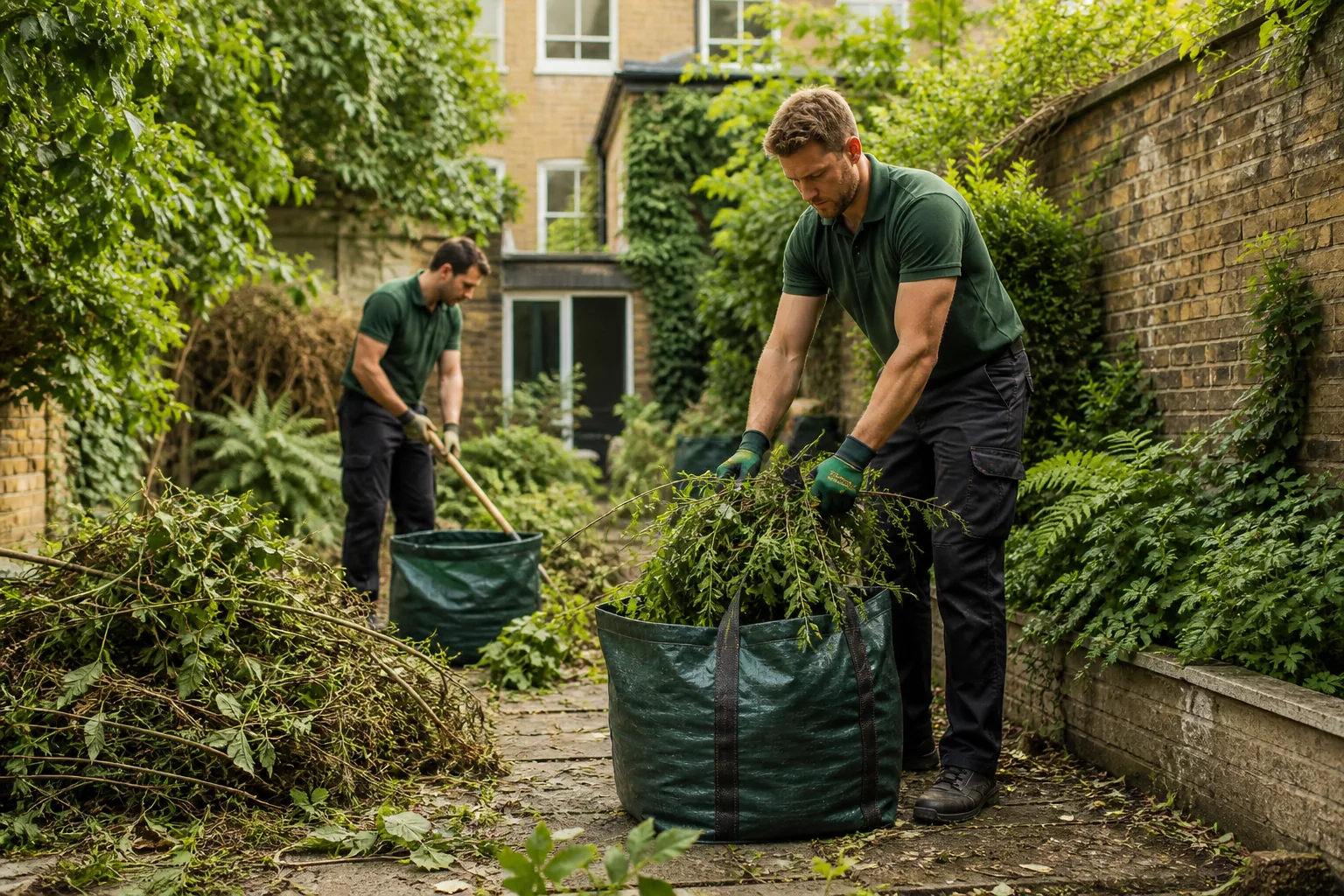
The first stage should reveal choices
When maintenance has lapsed, the first challenge is uncertainty. Long growth can hide edges, useful plants, debris and the true amount of material. A Tooting recovery brief does not promise instant perfection. It identifies the first result that will make the garden understandable: safe access, visible structure and enough control to assess what follows.
Retention decisions come before broad cutting. Customers should point out shrubs, climbers, bulbs or self-seeded plants they value. Where identification is uncertain, leaving a specimen for review is preferable to irreversible removal. Freddie’s Gardening can then reduce dominant vegetation around those anchors, opening the garden without erasing all maturity.
Waste and route define how much recovery fits. Ordinary green cuttings differ from soil, timber, rubble and household contents. Gate widths, steps and internal access affect movement. Recent wide photographs help the estimator divide the Tooting work into coherent stages and state what leaves. Hidden conditions discovered later are recorded rather than absorbed silently.
After broad control, finer work becomes possible. Edges can be re-established, lawns assessed and plants pruned with better information. Recurring visits may then preserve the recovered baseline. The early schedule can focus on regrowth before settling into seasonal maintenance. This transition keeps routine hours from being consumed indefinitely by the original backlog.
Gardening services in Tooting
Choose focused help or combine compatible priorities in a clearly scoped visit.
Garden Maintenance
Maintenance protects a recovered baseline through prioritised grass, weeds, edges and plant work.
Explore garden maintenance →Landscaping
Landscape proposals address persistent layout or drainage problems revealed after the garden is opened.
Explore landscaping →Turfing
Turfing follows clearance of failed growth, preparation and an agreed establishment plan.
Explore turfing →Fence Installation
Fence work is assessed once boundary access, supports and retained plants can be seen properly.
Explore fence installation →Garden Clearance
Clearance creates safe movement and broad legibility through defined, retain-aware stages.
Explore garden clearance →Lawn Care
Lawn care begins after hidden debris, extreme length or access problems no longer obstruct assessment.
Explore lawn care →Patio Cleaning
Patio cleaning is considered when the surface is exposed and its material, joints and runoff can be reviewed.
Explore patio cleaning →Tree Surgery
Trees receive specialist evaluation where height, condition or restricted lowering exceeds garden clearance.
Explore tree surgery →Gutter Cleaning
Gutter cleaning remains building work quoted around reach, even when vegetation initially obscures access.
Explore gutter cleaning →Commercial Grounds Maintenance
Commercial recovery can transition into a documented grounds standard for suitable managed sites.
Explore commercial grounds maintenance →Window Cleaning
Window care may be coordinated after access is restored, with elevations independently scoped.
Explore window cleaning →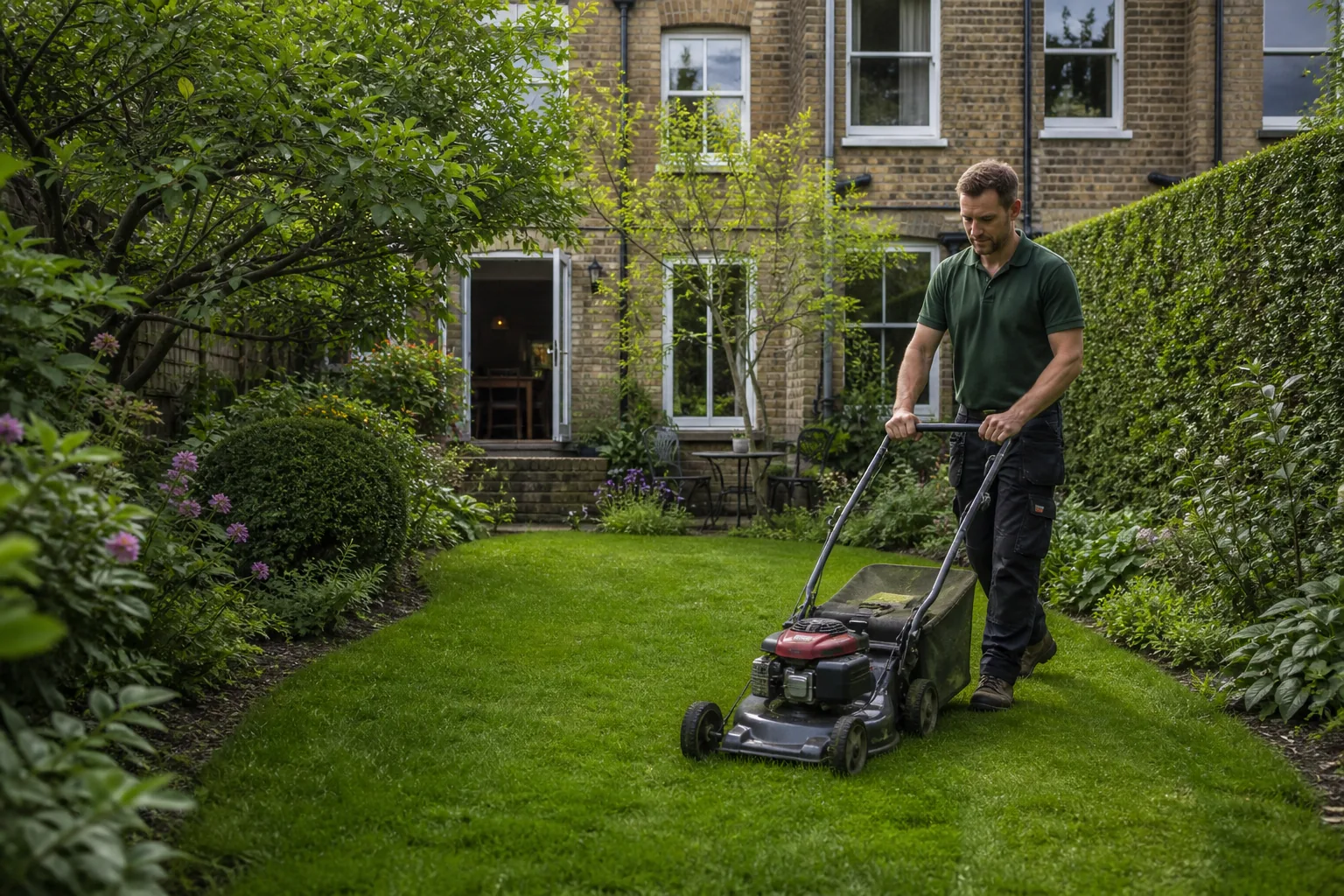
The first stage should reveal choices
A useful Tooting reset exposes paths, boundaries and retained structure. It may not deliver detailed planting or a repaired lawn in the same attendance. That limitation is constructive: once the space is visible, later decisions use evidence. Customers avoid paying for a speculative solution while the original condition remains concealed.
Recovery can be divided vertically as well as by zone. Ground weeds and access may come first, followed by manageable shrubs once safe working room exists. High canopies remain outside that sequence pending specialist assessment. Tooting customers can then understand why upper growth remains after substantial lower work without mistaking it for an unfulfilled promise.
An exposed patio may require only sweeping, or reveal staining, unstable joints and drainage concerns. Pressure cleaning is not assumed. Material and runoff receive a separate assessment, while structural repair remains outside cleaning. The clearance team can leave a legible area without promising a method that risks paving or newly visible beds.
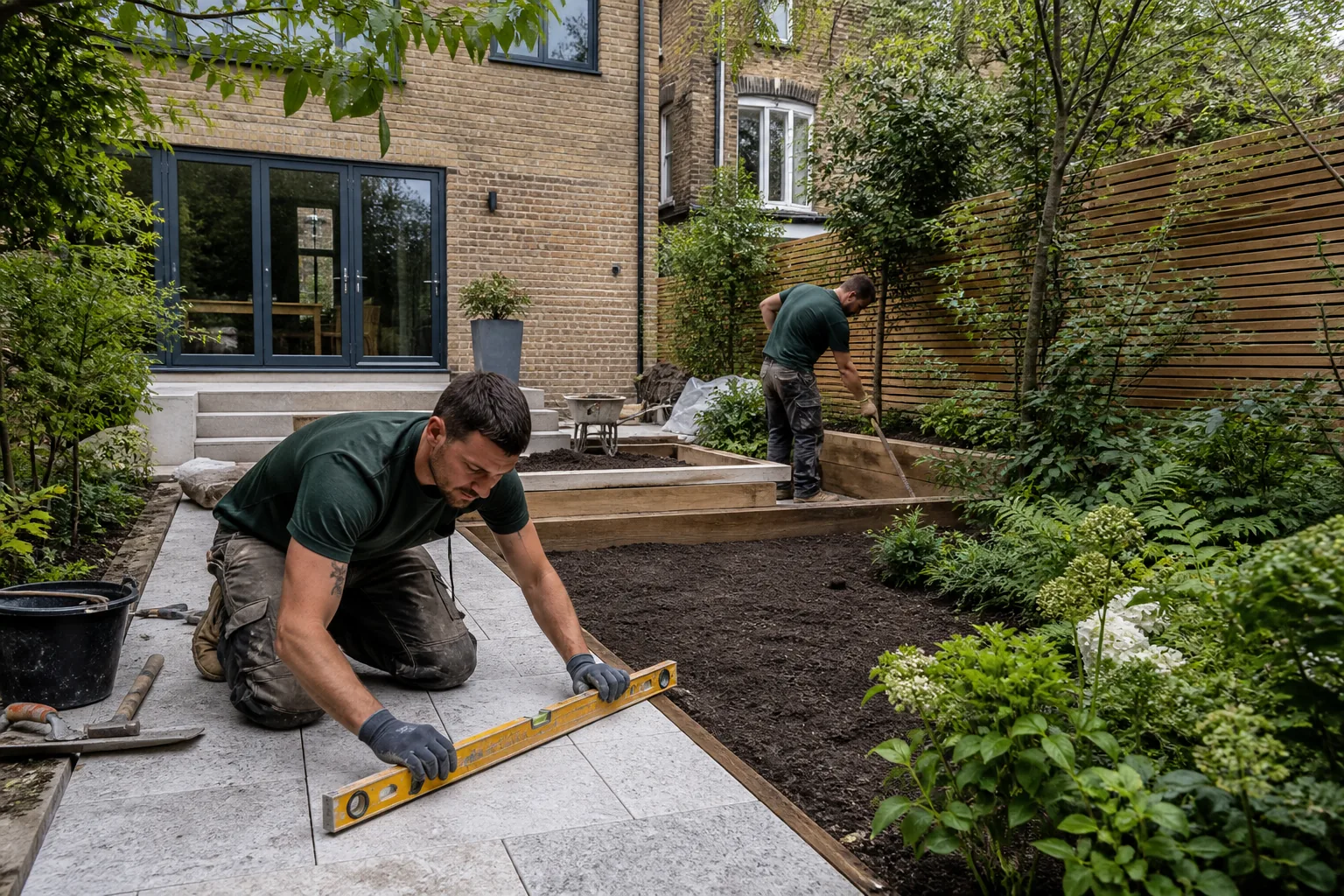
Define removal before generating it
Cut material expands when handled, and a few dense plants can produce surprising volume. The quotation identifies accepted vegetation and its route. Non-green categories are disclosed separately. This allows cutting priorities to reflect removal capacity and prevents a neat garden being paired with an unexplained pile.
Boundary condition often appears only after vegetation is reduced. Loose panels or failing supports are documented rather than concealed by pushing plants against them. Gardeners can maintain safe distance while a fence quotation is considered. Later planting can be coordinated with repair, avoiding repeated cutting or damage when materials enter the recovered space.
Before maintenance starts, the customer ranks recovered features. A central lawn, growing bed, seating route and screening boundary will not share one ideal frequency. The Tooting proposal allocates time through that hierarchy and monitors regrowth. Lower-priority zones stay in the handover so they do not drift back into backlog.

Build maintenance after regrowth is understood
Freshly cut vegetation may respond quickly, while newly exposed weeds can emerge after disturbance. Early Tooting return visits can target this response. Once growth stabilises, time shifts toward mowing, plant health and presentation. Frequency is reviewed from evidence rather than assumed at the clearance stage.
Clearing dense weeds may reveal bare soil that will not stay empty. Follow-up control, mulch, retained cover or a designed planting stage may be considered according to condition and preference. Freddie’s Gardening does not present unspecified chemical treatment as the automatic answer. The handover explains that continued control belongs to recovery rather than promising permanent eradication after one cut.
Old ties, pots or temporary supports may emerge among growth but are not discarded automatically. Some still serve retained plants; others are non-green waste. Photographing uncertain objects gives the customer a decision while safe work continues elsewhere. Recovery remains selective even where the original garden appeared indiscriminately overgrown.
Fixed photographic viewpoints strengthen staged recovery. Images after the first phase show how much structure was revealed and which growth remains. Later team members can recognise deliberate retention, while customers judge value through regained access and legibility rather than bag counts. Where several people approve work, the same evidence supports agreement before money is committed to turf, boundaries or replanting. The recovered Tooting baseline becomes a shared planning record rather than merely the end of a cutting appointment.
Timing can affect what a recovery stage should attempt. Very vigorous growth may be easiest to identify at one point in the year, while wet ground, active nesting or stressed plants can make another task inappropriate. The quotation is based on current evidence, and changed conditions are reviewed before cutting. This flexibility does not remove the stopping point. It allows Tooting work to substitute another accepted priority where sensible or to defer a damaging action with an explanation. Customers receive a record of the reason and can plan the next phase in a more suitable window instead of treating maximum immediate removal as the only sign of progress.
A first phase may also reveal that some apparently empty ground contains dormant plants. Customer records and cautious marking help prevent later maintenance from treating expected seasonal emergence as unwanted regrowth during the next growing cycle.
Gardening prices in Tooting
Verified starting prices are lawn care from £25, hedge trimming from £35, small garden clearance from £50, and weeding or plant care from £30. Dense Tooting recovery work is quoted for productive hours, safe cutting, retention, route and volume. The small-clearance entry point is not applied to an undefined backlog.
Each stage states its result, exclusions and removal. Lawn replacement, fence materials, landscaping and specialist trees remain separate. A customer can approve the essential opening phase without committing to every later option, then refine the plan once hidden condition has been revealed.
| Service | Published from |
|---|---|
| Lawn care | £25 |
| Hedge trimming | £35 |
| Small garden clearance | £50 |
| Weeding or plant care | £30 |
Care shaped around Tooting properties
A truthful first stage
Recovery promises visibility and control rather than an unsupported instant transformation.
Retention marked early
Useful maturity is protected before cutting changes the evidence.
Waste categories explicit
Vegetation is not confused with structures, soil or mixed rubbish.
A planned transition
Early regrowth control leads toward a stable maintenance rhythm.
Frequently asked questions
Can a Tooting overgrown garden be finished in one visit?
Sometimes, but not by assumption. Density, safe access, retention and waste decide whether one attendance or coherent stages are realistic.
Should I identify plants before clearance?
Yes. Mark valued growth in photographs and on site where possible. Uncertain specimens may be retained until a confident decision is available.
What counts as small garden clearance?
It is a limited scope fitting the published starting point, not every small-footprint garden. Accumulation and handling remain decisive.
Can hidden rubbish be removed?
Only if assessed and accepted. Rubble, soil, timber and household contents are not treated automatically as green waste.
When can lawn care begin after long grass?
After safe cutting reveals the surface and hidden debris or condition can be assessed. Repair advice then has a reliable basis.
Will regrowth need another visit quickly?
It may. Species, season and the severity of the initial cut influence response. An early follow-up can be discussed without guaranteeing a universal interval.
Can clearance keep a privacy screen?
Yes, if the desired screen is identified and the work is safe. Selective control can be prioritised over maximum reduction.
What does the first handover include?
It records completed zones, removed material, retained structure, discoveries and practical choices for the next phase.
Tell us what needs to change
Share photographs, access details and the finish you value. We will scope suitable work clearly.
Gardening Services Across Tooting
Properties in Tooting may sit close to Balham or Mitcham. Use the local links below to open the most relevant gardening page for the postcode.
Availability is checked for the property postcode, requested service and access. The interactive map is centred on Tooting and loads lazily to keep the main page responsive. See the complete scope on our London gardening services page.