
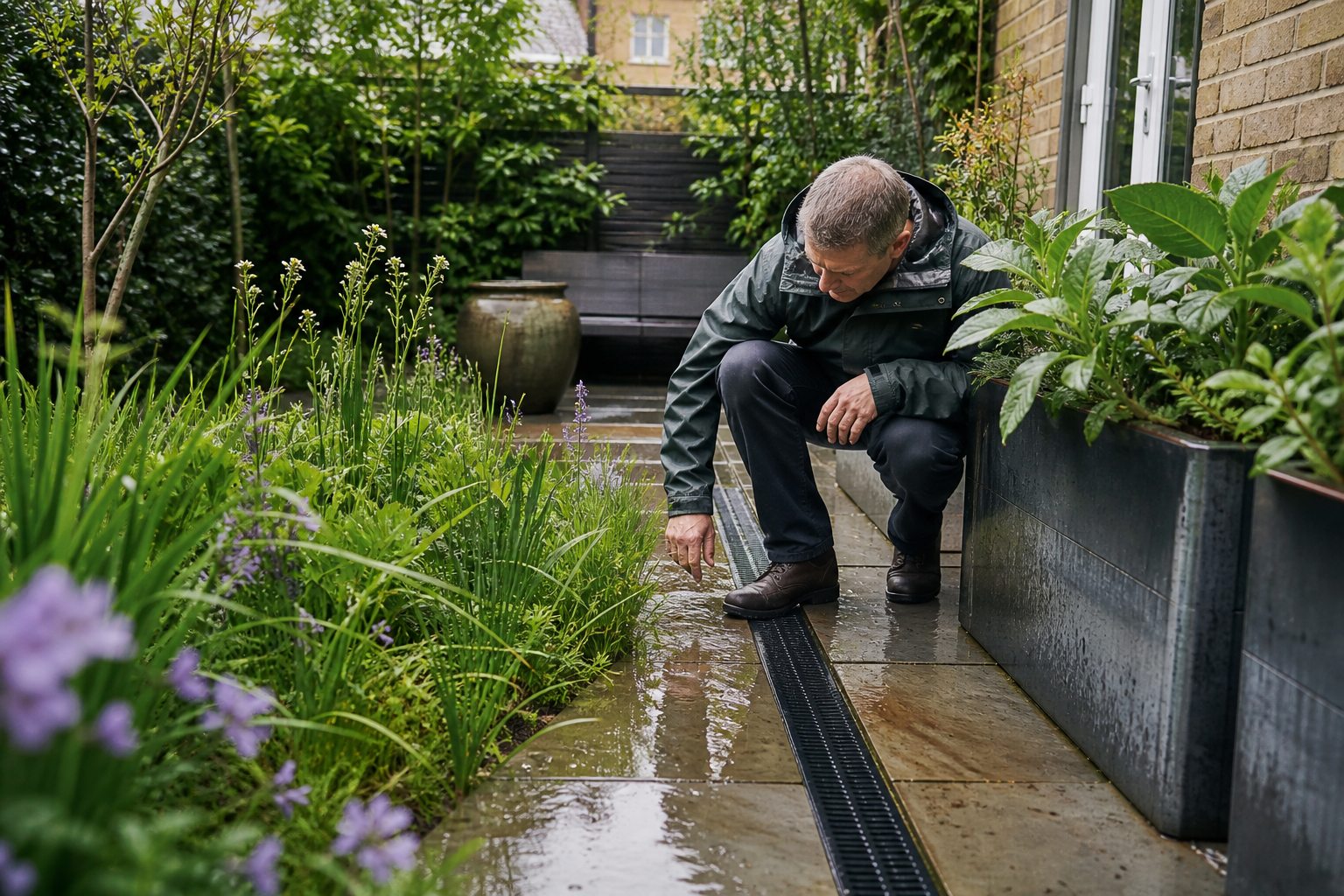
Heavy rain becomes damaging when water has nowhere safe to go. Preparation should slow runoff, keep drains and soil functioning, and protect vulnerable structures without simply pushing water towards a neighbour.
London gardens often combine compacted soil, paving, high boundaries and small level changes. During prolonged rain, these features can concentrate water beside the house, across paths or around plant roots. The solution begins with observing the route water already takes, then addressing blockages, soil structure and surface design in the correct order.
Watch the garden during ordinary rain
Do not wait for a storm to investigate. Note where puddles form, how long they remain and whether water arrives from a roof, neighbouring level or hard surface. Photograph the pattern and check it again after the rain stops.
Standing water for an hour on compacted paving is different from a bed that remains saturated for days. The first may need surface cleaning or joint repair; the second may indicate soil, level or drainage problems.
Clear the existing drainage route
Remove leaves and silt from channels, gullies and accessible grates. Check that downpipes are connected and not discharging at the base of a wall. Never open or alter a drain you do not understand; shared and combined systems may require qualified assessment.
Keep soil and mulch below damp-proof courses and air bricks. Repeatedly piling material against the house can bridge protective details and trap moisture.
Practical tip: Pouring large volumes of water into an unknown drain is not a safe test. Start with visual inspection and use a drainage professional when the route or ownership is uncertain.
Improve compacted soil carefully
Where foot traffic has compressed a lawn, hollow-tine aeration may improve the movement of air and water. Beds benefit from organic matter and protection from repeated walking, but digging wet clay can smear and further damage its structure.
A soakaway is not suitable everywhere. It needs adequate space, suitable ground and separation from buildings and boundaries. Small decorative gravel pits rarely solve a genuine drainage load.
Keep water in planted areas where possible
Healthy soil and dense planting slow rainfall and reduce splash. Bare, compacted ground sheds water quickly. Use suitable ground cover, mulch and planting to protect the surface while preserving access for maintenance.
Rain gardens can manage runoff from limited areas where levels and soil allow, but plants must tolerate both temporary wetness and dry periods. The overflow route remains essential during exceptional rainfall.
Review paving and artificial surfaces
Impermeable paving can direct water towards doors or neighbouring property. Check falls, joints and thresholds before adding sealants or surface coatings. Permeable construction works as a complete system; replacing a few slabs with gravel may not correct an unsuitable base.
Artificial grass can conceal poor drainage and makes diagnosis harder. If water sits beneath it, lifting and rebuilding the base may be more effective than adding holes at random.
Protect plants after waterlogging
Roots in saturated soil receive too little oxygen. Avoid walking around affected plants and do not add fertiliser as an emergency response. Once water recedes, allow the soil to recover and remove only growth that is clearly dead or diseased.
Container plants need free drainage holes and should not stand in full saucers through prolonged rain. Raise large pots slightly and check that roots have not blocked the outlet.
Know when professional investigation is needed
Seek advice when water approaches internal floor level, appears contaminated, causes repeated boundary disputes or returns despite routine maintenance. Subsidence, retaining walls and large level changes require specialist judgement.
Keep records of dates, rainfall and affected areas. Evidence helps distinguish an exceptional storm from a recurring defect and supports a proportionate solution.
Prepare a garden before a forecast storm
Secure lightweight furniture, empty pots and loose covers before wind and rain arrive. Clear ordinary leaves from visible gullies without lifting covers or entering drainage systems. Check that water-butt overflows are connected and directed to a suitable place rather than beside a wall.
Move vulnerable containers away from roof drip lines and ensure drainage holes are open. Do not prune large branches hurriedly in poor weather. If a tree or structure appears unsafe, restrict access and use an appropriately qualified professional.
- Charge a torch and keep the access route clear.
- Photograph existing water levels and defects.
- Close sheds and secure loose garden items.
- Keep electrical connections away from standing water.
- Avoid unnecessary travel across saturated soil.
Diagnose water in a basement or lower-ground garden
Lower-ground London gardens may receive water from several directions: direct rainfall, paved terraces, steps, neighbouring levels or defective drainage. Do not assume the nearest puddle identifies the source. Note when water appears in relation to rainfall and whether it is clean, silty or contaminated.
Keep channels and thresholds visible and free from decorative gravel or mulch. Pump systems and non-return valves require specialist maintenance; test them according to professional guidance rather than waiting for an emergency. If internal space is threatened, seek building and drainage advice promptly.
Practical tip: A garden maintenance team can clear access and vegetation, but diagnosis of water entering a building belongs with qualified drainage or building specialists.
Select plants for periodically wet ground
A plant labelled moisture loving may still fail in soil that remains without oxygen for long periods. Distinguish a reliably moist bed from one that alternates between stagnant winter water and hard summer drought. Choose plants for the full cycle, not only the wettest week.
Improve planting in zones. Keep vulnerable crowns out of the lowest point, use suitable species where water temporarily gathers and protect soil from compaction. New plants still need watering during dry establishment periods even if the site is wet in winter.
Review the garden after the water recedes
Photograph silt lines and damaged areas before cleaning; they show the direction and depth of flow. Remove litter, contaminated material and blocked debris safely. Allow saturated soil time to drain before digging, mowing or moving heavy equipment across it.
Check timber, fixings and paving for movement. Monitor plants for delayed root damage rather than feeding immediately. Update the drainage and maintenance plan using what the event revealed, including overflow routes that worked and points where water escaped control.
- Record the duration of standing water.
- Inspect boundaries and surface levels.
- Clean tools used in contaminated areas.
- Delay cultivation until soil is workable.
- Arrange specialist assessment for recurring or structural problems.
Related gardening guides
- Seasonal garden maintenance through changing weather
- Low-maintenance garden planning
- Garden clean-up and safe access planning
Need a hand with the practical work?
If wet weather has exposed maintenance or access problems, we can help clear vegetation, restore usable surfaces and identify when a drainage specialist is the right next step.