
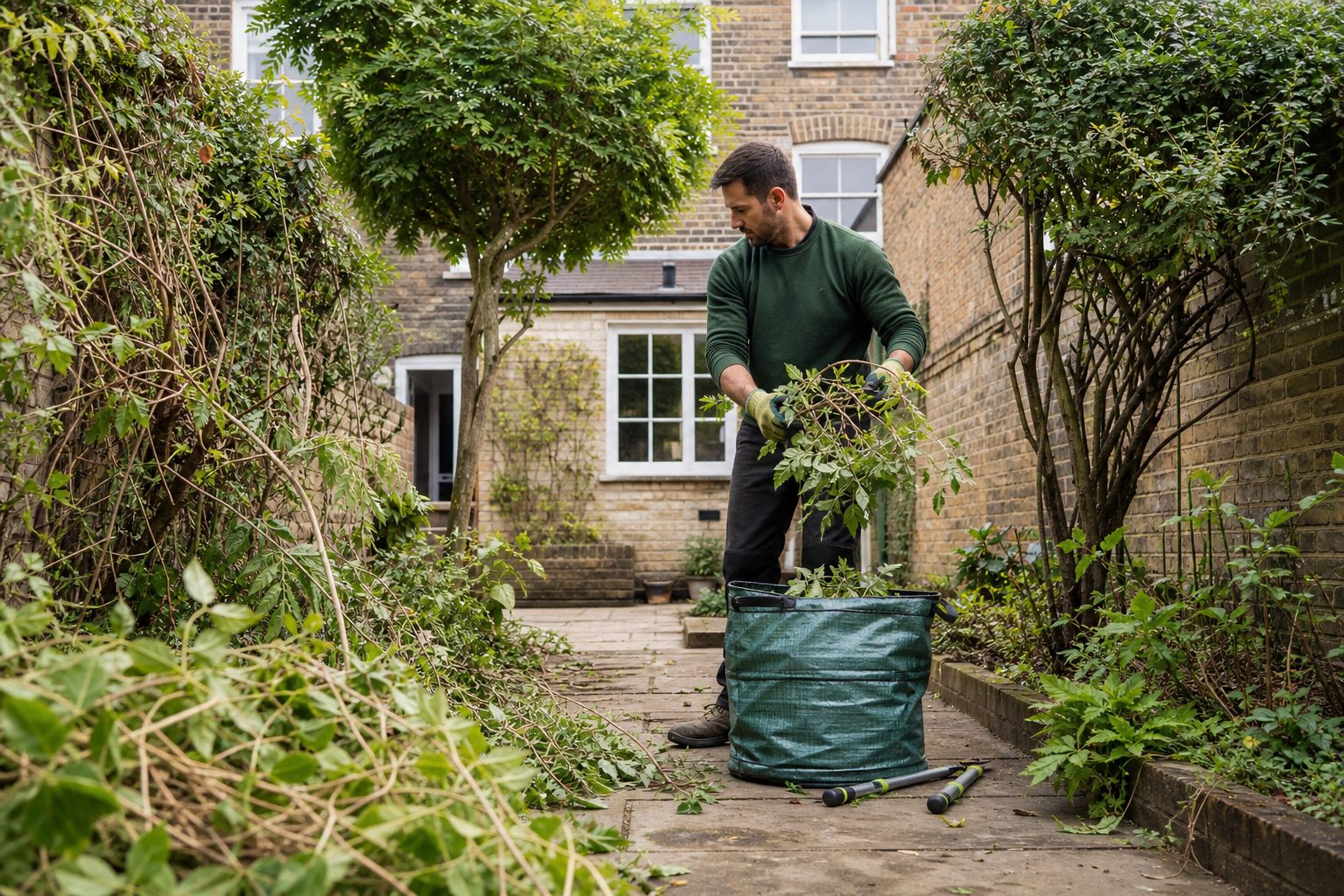
A successful garden clean-up is not a race to remove everything. It is a controlled reset that reveals the useful structure, protects valuable plants and leaves the space easier to maintain.
Overgrown London gardens often contain more potential than they first appear to. Beneath long grass and self-seeded growth there may be established shrubs, usable paving and mature boundaries worth retaining. The safest approach is to assess access, waste, wildlife and priorities before cutting begins. This guide explains how to organise the work and avoid the expensive mistakes that come from clearing indiscriminately.
Survey the garden before choosing tools
Walk the entire boundary if it is safe to do so. Identify steps, inspection covers, low wires, unstable fencing, broken glass and hidden objects in long grass. Check where material can leave the property; many terraced homes require all tools and waste to travel through the house.
Photograph areas before work starts and decide what must remain. Mature shrubs may look untidy simply because climbers or brambles have grown through them. Mark plants you recognise and postpone uncertain removals until leaves or flowers make identification easier.
- Confirm the route for tools and green waste.
- Locate utilities, drains and inspection covers.
- Check boundaries before cutting shared hedges or climbers.
- Separate urgent safety work from cosmetic improvements.
Work from access routes towards planted areas
Create a safe working route first. Clear enough width to move without dragging cuttings across retained plants. On narrow sites, establish one collection point close to the exit and keep it clear of doors and fire routes.
Cut long grass in stages rather than forcing a mower through it. A first pass exposes stones, branches and uneven ground; a lower second cut can follow once hazards are removed. Avoid scalping damp or shaded turf, which may already be under stress.
Practical tip: Do not begin with the most visible flower bed. Safe access and an organised waste route make every later stage faster and reduce accidental damage.
Recover shrubs instead of turning them into blocks
Many neglected shrubs respond better to selective renovation than severe shearing. Remove dead, damaged and crossing branches first, then step back. Opening the plant gradually preserves flowering wood and produces a more natural outline.
Pruning time matters. Spring-flowering shrubs commonly carry buds on growth made the previous year, while some summer-flowering plants can be reduced in late winter. If identification is uncertain, make only safety cuts and schedule the structural pruning for the correct season.
Control brambles, ivy and self-seeded trees
Brambles are easiest to handle when long stems are shortened and bundled before the crowns are tackled. Wear suitable gloves and eye protection. Digging out crowns reduces regrowth, but roots close to walls, sheds or desirable plants may require repeated cutting rather than aggressive excavation.
Ivy on a sound wall is not automatically harmful, but it can hide defects and become heavy around gutters or roofs. Never pull thick established stems from fragile masonry. Self-seeded sycamore, buddleia and ash should be assessed early; small seedlings are simple to remove, whereas established specimens may need staged work or professional advice.
Plan green-waste handling before the first cut
Fresh vegetation occupies far more volume than expected. Separate soft green material, woody branches, soil and general rubbish because they may follow different disposal routes. Do not overfill bags that must be carried through a property.
Home composting works well for suitable soft material, but a neglected garden can produce more than a domestic bin can process. Diseased plants, invasive species and thick woody growth need appropriate handling. Agree what will be removed, chipped, retained or composted before work begins.
Restore surfaces carefully
Sweep paving before deciding it needs pressure washing. Remove weeds manually from joints where possible and check whether slabs are loose or pointing is already failing. Excessive pressure can damage soft stone, open joints and spread dirty water onto walls and planting.
Clean a small test area first and choose a method suited to the material. Algae often returns where shade and drainage remain unchanged, so improve the underlying condition instead of relying on repeated aggressive cleaning.
Finish with a realistic maintenance plan
A cleared garden can deteriorate quickly if bare soil and exposed edges are left without a plan. Mulch suitable beds, define lawn margins and decide which fast-growing plants need regular checks. It is better to maintain a smaller number of healthy features than to refill every empty space immediately.
Set priorities for the next three months: watering retained plants, monitoring regrowth, completing season-sensitive pruning and repairing boundaries. A clean-up becomes a lasting improvement only when the follow-up work matches the time available.
Plan clearance around nesting birds and other wildlife
Dense hedges, ivy and bramble can support active nests, especially during spring and summer. Inspect carefully before cutting and stop if nesting activity is found. The legal and responsible course is to leave the occupied area undisturbed until it is no longer in use.
Clear in sections rather than stripping all cover in one day. Retain a quiet habitat corner where practical and check log piles before moving them. Wildlife awareness does not prevent a garden being made usable; it changes the sequence and timing of the work.
Practical tip: Repeated adult birds carrying food into the same dense area are a strong reason to pause and observe before any cutting.
Handle mixed rubbish separately from green waste
Neglected gardens may contain metal, glass, treated timber, rubble, soil and household rubbish among vegetation. Wear suitable protection and do not feed unknown material into garden machinery. Separate waste streams as soon as items are uncovered.
Painted or treated wood should not be burned or casually composted. Soil can be expensive and difficult to remove, so confirm whether it is genuinely surplus before excavation. Suspected asbestos, chemicals or clinical waste require specialist handling.
- Use rigid containers for sharp fragments.
- Keep soil out of ordinary green-waste bags.
- Do not mix batteries or chemicals with vegetation.
- Record unusual waste before arranging collection.
Restore an overgrown lawn in stages
Long grass may conceal a usable lawn, but cutting it immediately to a normal height can expose pale stressed growth and uneven ground. Reduce the height gradually, remove heavy cuttings and allow the surface to dry between operations where needed.
Once visible, assess moss, bare areas, compaction and shade. Aeration, scarification and overseeding should follow the condition and season, not be performed automatically together. If the area receives too little light or too much traffic, adjust the layout rather than repeating repairs.
Prepare a clear completion handover
List what was removed, what was intentionally retained and which items need follow-up in another season. Identify plants that were cut back rather than killed and explain expected regrowth. Record boundary or drainage defects revealed during the clearance.
Provide simple maintenance dates for mowing, weed checks and suitable pruning. A handover turns a dramatic one-off clearance into a stable starting point and helps a new owner, tenant or gardener avoid reversing careful decisions.
Related gardening guides
- Quick garden makeover ideas with lasting value
- Easy-care ideas for busy homeowners
- Preparing a garden for heavy rain
Need a hand with the practical work?
For gardens that need a controlled reset, our garden clearance and maintenance services can be scoped around access, retained planting and an agreed green-waste plan.