
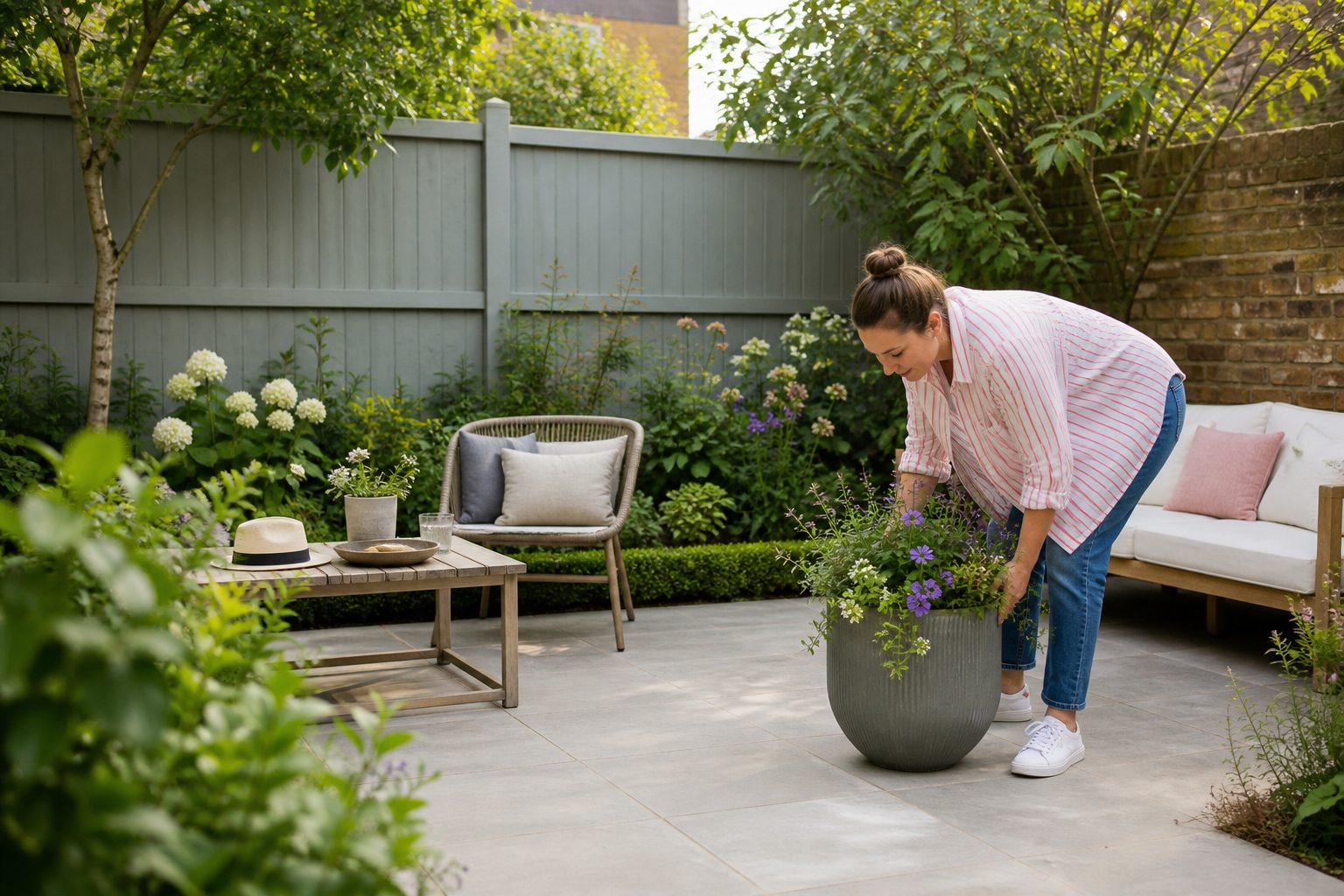
The quickest garden improvements are usually edits, not additions. Clear a view, define an edge, repair one dominant surface and give existing planting enough space before buying new features.
A garden makeover can feel substantial without becoming a full landscaping project. The key is to choose changes that influence the whole view and that will still work after the first month. Begin with condition and function, then use planting and finishing details to create a deliberate result.
Choose the view that matters most
Stand at the main door and the window used most often. Identify the one feature that pulls attention for the wrong reason: a damaged fence, cluttered corner, shapeless shrub or stained paving. Make that the first project.
Do not distribute a small budget across many unfinished changes. One repaired boundary or coherent seating area creates more impact than several decorative objects.
Edit before buying
Remove broken pots, redundant supports and items with no planned use. Relocate healthy plants that are genuinely in the wrong place only when the season and species allow. Prune selectively to reveal shape and space.
Retain mature plants that provide screening or structure unless there is a clear reason to remove them. Replacing established growth is slower and more expensive than renovating it.
Practical tip: Create a temporary holding area for uncertain objects and plants. If nothing is needed after a month, decide whether it should be reused, donated or removed.
Refresh boundaries responsibly
Repair loose boards and prepare surfaces before painting. A consistent muted colour can calm several fence styles and make foliage more prominent. Confirm ownership and permission before altering a shared boundary.
Use climbers only with supports suited to their mature weight. An instant screen that overwhelms the fence creates a future maintenance problem.
Redefine beds and lawn edges
A clear edge immediately improves the relationship between lawn and planting. Correct awkward slivers and curves that are difficult to mow. Top up mulch after weeds are removed and the soil is moist.
If the lawn is patchy, diagnose shade, traffic, compaction or drainage before reseeding. A makeover should correct the cause rather than conceal it for one photograph.
Build one useful seating zone
Measure furniture and circulation before laying a surface. Clean or repair existing paving first; it may not need replacement. Add one large container or a restrained planting edge rather than surrounding the area with many small pots.
Consider evening sun, privacy and the route from the kitchen. A seating area that is pleasant but awkward to reach will be used less than expected.
Add seasonal colour in controlled layers
Use bulbs, a small group of annuals or a few repeat-flowering perennials to refresh established beds. Match them to the available light and moisture. Repeat colours rather than scattering unrelated plants.
Containers provide fast impact, but choose a scale that will not dry out immediately. Plan where they will spend winter and how they will be watered.
Finish with maintenance in mind
Write down what the refreshed garden now requires: watering during establishment, hedge timing, lawn care and surface cleaning. Set the next review date before rapid growth or leaf fall.
A lasting makeover makes future work simpler. If a new feature adds a difficult weekly task, it should earn that effort through real use or value.
Make a rental garden presentable without permanent changes
Tenants can achieve a substantial visual improvement without altering boundaries or installing permanent structures. Begin by confirming which tasks fall within the tenancy agreement. Mow and edge usable lawn, clear access, organise existing pots and remove only obvious annual weeds or dead material. Obtain written permission before removing established shrubs, painting fences or fixing supports to walls.
Use movable containers, freestanding screens and furniture to define the space. Keep receipts and before-and-after photographs if the work forms part of an end-of-tenancy handover. Avoid planting vigorous climbers or large shrubs that may become the next tenant’s maintenance problem.
- Check the inventory and tenancy responsibilities.
- Request approval for structural or boundary changes.
- Keep access to meters, drains and shared routes clear.
- Choose improvements that can be maintained for the rest of the tenancy.
Set a sensible makeover budget
Divide spending into repair, preparation, planting and finishing. Repair usually comes first: new plants will not compensate for a dangerous step or failing boundary. Preparation includes waste removal, soil improvement and cleaning. These less glamorous items determine whether the visible finish lasts.
Price the maintenance that follows as well as the installation. A cheap fast-growing screen may need several cuts each year, while numerous small containers require compost, feeding and frequent watering. Hold back part of the budget for discoveries made during clearance, such as damaged paving or poor soil.
Practical tip: If the budget cannot complete an area properly, finish one smaller zone and leave the remainder stable and clean rather than spreading unfinished work across the garden.
A two-week makeover sequence
On the first visit, survey the site, agree retained plants and remove rubbish or obvious hazards. Next, complete clearance and pruning that is suitable for the season. Repair boundaries and surfaces only after they are exposed and can be assessed. Clean paths once cutting and soil work are finished, not before.
During the second week, redefine bed edges, prepare soil and install planting. Place furniture and containers last so circulation can be checked. Water new plants thoroughly and record the immediate aftercare. The staged sequence prevents clean surfaces being damaged and makes waste handling more efficient.
- Day 1: survey, photographs and priorities.
- Days 2–4: clearance, waste and appropriate pruning.
- Days 5–7: repairs and surface preparation.
- Week 2: soil, planting, containers and aftercare.
Know when a quick makeover should pause
Stop and seek appropriate advice if clearance reveals major cracks, unstable retaining walls, suspected asbestos, contaminated water or large unsafe branches. Do not conceal defects behind screens or new planting. A makeover is cosmetic and horticultural work; it is not a substitute for structural, electrical or drainage investigation.
Pause planting when soil remains waterlogged, rubble-filled or contaminated. Correcting the site first protects the investment and avoids replacing plants later. The most professional result is sometimes a clean, safe garden with a documented second phase rather than a rushed finished photograph.
Related gardening guides
Need a hand with the practical work?
Our garden clearance, maintenance and landscaping services can be combined into a focused makeover with agreed priorities and waste handling.